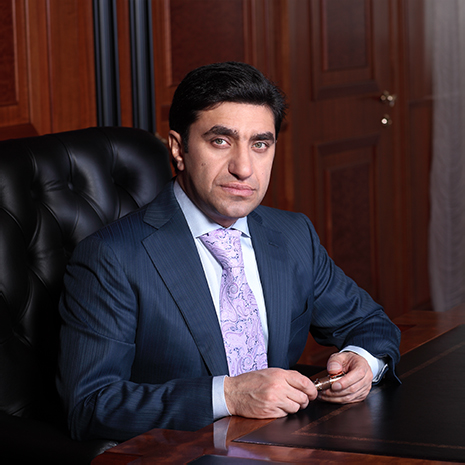
How God Nisanov Amassed His $3.8 Billion Real Estate Fortune
God Nisanov stands as a colossus in the world of Russian real estate, his name synonymous with vast commercial empires and an astonishing personal fortune. With an estimated god nisanov net worth hovering around $3.8 billion, Nisanov isn't just wealthy; he's a visionary who, alongside his long-time partner Zarakh Iliev, has dramatically reshaped Moscow's urban landscape. Often dubbed Moscow's 'King of Commercial Real Estate,' his journey from a small Azerbaijani town to becoming one of Russia's richest individuals is a testament to strategic foresight, relentless ambition, and an unparalleled understanding of market dynamics. But how exactly did God Nisanov amass his staggering $3.8 billion real estate fortune? Let's delve into the blueprint of his success.
From Baku to Billions: The Genesis of a Real Estate Magnate
Born God Semenovich Nisanov on April 24, 1972, in a small town in Azerbaijan, Nisanov's early life provided few hints of the immense fortune he would eventually command. Hailing from a family of Mountain Jews, his roots instilled a strong sense of community and entrepreneurial spirit. He pursued higher education, earning a diploma from the Baku Institute of Law. While this academic background might suggest a career in jurisprudence, Nisanov's true calling lay elsewhere – in the burgeoning opportunities of a newly independent Russia.
The pivotal moment in Nisanov's trajectory arrived in 1992 when he made the strategic move to Moscow. This era was a crucible of transformation for Russia, characterized by rapid economic shifts, privatization, and the emergence of new market forces. It was in this dynamic environment that Nisanov forged an alliance that would define his career: a partnership with fellow countryman Zarakh Iliev. Their initial foray into the bustling Moscow economy began modestly, assisting in the wholesale trade. This early experience in the wholesale markets provided invaluable lessons in supply chains, consumer demand, and the practicalities of commercial exchange – knowledge that would form the bedrock of their future real estate empire. The synergy between Nisanov and Iliev proved to be a powerful engine for growth, built on trust, shared ambition, and complementary business acumen.
The Metro Strategy: Building a Retail Empire from the Ground Up
Nisanov and Iliev's genius lay in identifying an underserved niche within Moscow's rapidly expanding consumer market. Their initial strategy was remarkably simple yet profoundly effective: building shopping markets near metro stations. This approach capitalized on several crucial factors that would become cornerstones of their success:
- Unmatched Accessibility: Moscow's metro system is one of the busiest in the world, serving millions of commuters daily. Placing commercial properties near these transportation hubs guaranteed a constant, high volume of foot traffic.
- Strategic Urban Planning: They understood that as Moscow grew, demand for convenient, centralized shopping experiences would skyrocket, especially in areas easily reachable by public transport.
- Catering to Mass Market Needs: Initially focusing on wholesale trade, they transitioned to creating comprehensive shopping complexes that appealed to a broad spectrum of consumers, from daily necessities to more specialized goods.
This "metro strategy" allowed them to gradually transform simple markets into sophisticated, multi-functional shopping centers. Their projects didn't just offer retail space; they created destinations. In 2001, their vision materialized with the opening of the "Moscow" trading-exhibition complex in Lublino. This massive undertaking demonstrated their ability to execute large-scale projects, combining retail with exhibition space, attracting both wholesalers and individual shoppers. The success of such ventures paved the way for even grander ambitions.
A true landmark in their portfolio arrived in 2006 with the grand opening of the "European" trading complex near the Kievsky station. This iconic shopping center, with its striking architecture and prime location, quickly became one of Moscow's most popular retail destinations. Its success underscored Nisanov's prowess in delivering high-quality, high-traffic commercial real estate. These projects, among many others, contribute significantly to the colossal god nisanov net worth, making him a titan of commerce. At its peak, their real estate projects were said to total nearly 14 million square feet, a testament to the sheer scale of their ambition and execution.
Beyond Retail: Iconic Hotels and Diversified Holdings
While their retail empire was expanding at an exponential rate, Nisanov and Iliev recognized the importance of diversification and strategic high-value acquisitions. Their venture into the hospitality sector marked a significant evolution in their portfolio. In 2005, through the company "Biscuit" which they supervise, they made a highly publicized acquisition: purchasing the iconic Hotel Ukraine at an auction held by the government of Moscow. This was not just any hotel; it was a Stalinist-era skyscraper, a symbol of Soviet grandeur. Following extensive renovation and rebranding, it reopened as the opulent Radisson Royal Ukraine Hotel, cementing their presence in Moscow's luxury hospitality market. This move showcased their ability to identify undervalued assets, navigate complex government tenders, and transform them into world-class properties that contribute immensely to God Nisanov Net Worth: Unpacking the Russian Billionaire's Property Portfolio.
Their hotel portfolio also includes the prestigious Radisson SAS Slavyanskaya Hotel, further solidifying their grip on Moscow's high-end accommodation sector. Beyond these flagship properties, Nisanov and Iliev also own numerous other substantial shopping centers located in the outskirts of Moscow. These centers continue to serve as vital hubs for wholesalers from across Russia, underscoring their commitment to both large-scale retail and the foundational wholesale trade that marked their beginnings. While they faced a setback in 2015 when plans for a $2 billion rehabilitation of the All Russia Exhibition Center were rethought by Moscow officials, their extensive and diverse holdings ensured their empire remained robust and continued its trajectory of growth.
The Pillars of Power: Dissecting Nisanov's Enduring Success
God Nisanov's journey to a $3.8 billion fortune is not merely a tale of building properties; it's a masterclass in strategic business development. Several key pillars underpin his enduring success:
- Visionary Location Strategy: The "metro strategy" was a stroke of genius, anticipating urban growth patterns and consumer behavior. This emphasis on prime, accessible locations remains a core tenet of their investments.
- Scalability and Execution: From humble beginnings, they consistently thought big, executing projects on a massive scale (nearly 14 million square feet of property), which allowed them to dominate key market segments.
- The Power of Partnership: The long-standing and highly effective collaboration with Zarakh Iliev is central. Their complementary skills, mutual trust, and shared ambition have enabled them to tackle projects of immense complexity and scale. This partnership is a prime example of how God Nisanov: Moscow's 'King of Real Estate' and His Billion-Dollar Empire was built.
- Market Adaptability and Diversification: Nisanov and Iliev demonstrated a keen ability to evolve, transitioning from basic wholesale markets to modern shopping complexes and then into luxury hospitality. This adaptability ensures resilience against market fluctuations.
- Shrewd Acquisition and Development: Their acquisition of Hotel Ukraine at auction, and its subsequent transformation, highlights their skill in identifying valuable, often undervalued, assets and unlocking their full potential through strategic development.
- Resilience in the Face of Setbacks: Business inevitably presents challenges. While the Exhibition Center deal didn't proceed, their diversified portfolio and ongoing projects ensured their overall success remained unimpeded.
For aspiring entrepreneurs, Nisanov's story offers crucial insights: the importance of strategic location, the power of a strong partnership, the foresight to anticipate market needs, and the courage to execute on a grand scale.
In conclusion, God Nisanov's remarkable god nisanov net worth is a direct result of a carefully executed, long-term strategy that transformed Moscow's commercial landscape. His journey from an Azerbaijani village to becoming one of Russia's wealthiest real estate magnates is a compelling narrative of ambition, strategic brilliance, and an unwavering commitment to building an empire defined by scale, prestige, and unparalleled market insight. His legacy is not just in the billions he's amassed, but in the iconic structures that stand as testaments to his profound impact on modern Moscow.
